


A Dance of Fire and Ice
4.71.54K Reviews
App Specs
- Version
- 3.3.1
- Updated On
- License
- $1.99
- Downloads
- 1,000,000+
- Developer
- 7th Beat Games
- Categories
- Music
- Platform
- Android, iOS
Screenshots
 Analysis by AppCompare
I first thought A Dance of Fire and Ice would be a quick, casual rhythm game: listen, tap, move on. It took only a few turns to show me that its simplicity is deceptive. I’m guiding two planets around a twisting route, and every tap has to land at the right moment. There is no pile of buttons to learn, but the timing quickly becomes exacting. That makes this music game feel less like a reflex test and more like a small performance, where I have to pay attention to what I hear as well as what I see.
Getting to Know the Beat
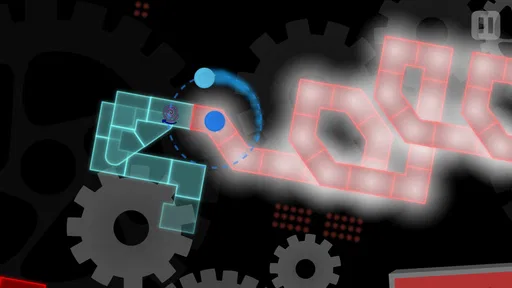
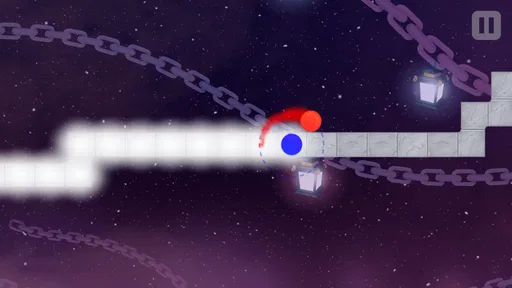
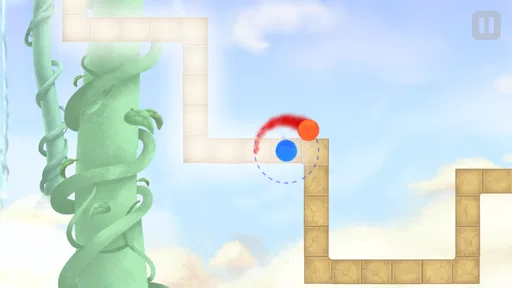
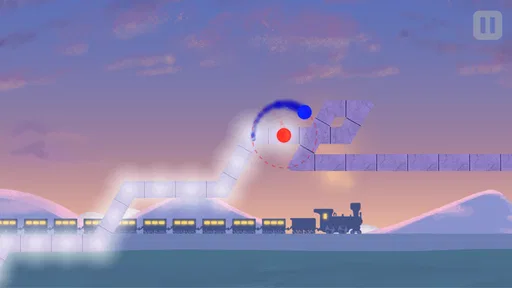
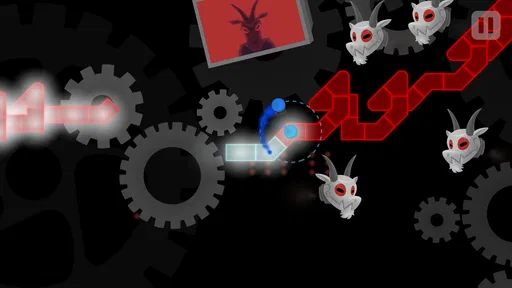
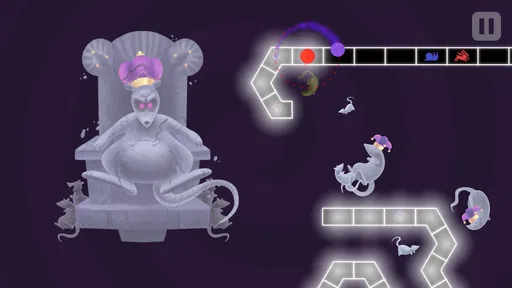
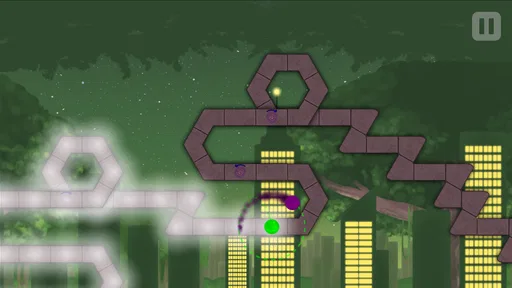
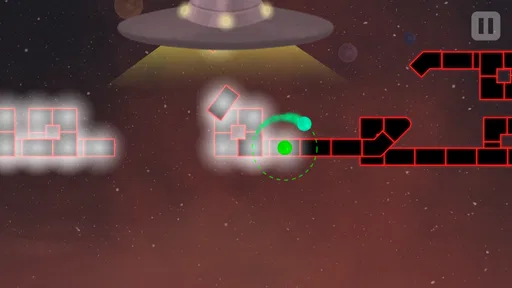
So, what’s the deal with A Dance of Fire and Ice? The game is a simple yet challenging rhythm game where you control two orbiting planets. Your mission? To keep them spinning in harmony with the beat. Sounds easy, right? Well, it’s not. The planets move along a winding path, and you need to tap in time to keep them from crashing off course.
The controls are straightforward—just a single tap to keep the rhythm. But don’t let that fool you. The game quickly ramps up in difficulty, demanding precision and perfect timing. Missing a beat isn’t just a minor slip-up here; it means starting the level over. This might sound frustrating, but it’s a huge part of the charm. It’s like the game is saying, "Hey, you can do better!"
The Visual and Audio Experience
The visual design of the game is minimalistic yet mesmerizing. The path unfolds before you in vibrant colors, creating a hypnotic journey that pulls you in. The real star of the show, though, is the music. Each level is set to a unique track that dictates the pace and rhythm. The music and visuals are in perfect sync, creating an immersive experience that’s hard to put down.
It’s not just about tapping to the beat; it’s about feeling the music. Each note, each rhythm, each tap becomes a part of the song. You’re not just playing a game; you’re playing an instrument.
Why You’ll Love It
If you’re a fan of rhythm games, you’ll find a lot to love here. The simplicity of the controls means anyone can pick it up, but mastering it is another story. The game is challenging, no question, but that’s what makes it so rewarding. Each level feels like a triumph, a testament to your growing skills and improved timing.
And let’s talk about the replay value. Once you’ve conquered the initial levels, you’ll want to go back and perfect your scores. There’s a real sense of accomplishment in nailing a track that once seemed impossible.
Worth Reading Before You Choose

EA SPORTS FC Mobile 26 Is a Bigger Football Game, but It Takes Time

Flipboard Shows What News Apps Must Do Beyond the Feed

Switching to Android Auto Means Rethinking Your Driving Routine

Google Calendar Makes a Crowded Week Easier to Manage

Ludo King Makes the Most of the Minutes Between Plans

Baby Panda World Brings Quick Play to Modern Phones, but Its Game Library Feels Busy
A Word of Caution
Now, a quick heads-up for those who might get frustrated easily. This game can be tough, and it doesn’t hold your hand. It demands precision and patience. But if you’re up for the challenge, you’ll find it incredibly rewarding. Just remember, every failure is a step closer to success.
If you find yourself stuck, take a break, come back, and try again. The satisfaction of finally getting it right is well worth the effort.
How I’d Fit It Into a Day
This is a game I’d reach for when I have a few focused minutes rather than when I want to half-watch a show and tap absent-mindedly. A level asks for active listening, so a short break between tasks can be a better fit than a noisy commute or a conversation-filled room. If I’m waiting for an appointment, I can try a section, notice where my timing slips, and put the phone away without needing to remember a complicated control scheme.
When a run goes wrong, I try not to hammer the screen faster. I listen for the pulse, watch the route, and make a deliberate tap on the beat instead of reacting to the planets’ position alone. That small change matters: the path is a visual guide, but the rhythm is the real instruction. If I repeatedly miss at the same point, I pause for a moment and identify whether I’m rushing, hesitating, or losing the musical count. It turns retries into practice rather than blind repetition.
That also makes the game a useful choice for someone who wants to train attention to rhythm without learning a complicated instrument interface. I wouldn’t call it a substitute for music lessons, but it does make timing tangible: the sound gives a pattern, and the tap is my response. Players who enjoy listening closely may find the challenge satisfying even if they don’t usually chase high scores.
What the Challenge Feels Like
The one-tap design lowers the barrier to starting, but it doesn’t make the experience forgiving. That distinction is important. A newcomer can understand what to do almost immediately, yet still need patience to execute it consistently. If you expect a game to ease you in with generous timing or let you mash through mistakes, this may feel severe. Its appeal depends on accepting that a clean run comes from learning the rhythm, not from finding a shortcut.
I also wouldn’t treat every missed attempt as proof that I lack musical ability. A mistimed tap can come from distraction, an awkward grip, or simply trying to play when I’m tired. I get more from a brief, attentive session than from continuing while annoyed. The reset after a mistake can sting, but it also makes each successful passage feel earned; the trade-off is that the same strictness can turn a relaxing mood into a tense one if I keep pushing past my patience.
For mobile play, a steady hold on the device and a quiet moment help me concentrate. The action uses one tap, so I don’t need elaborate hand placement, but a screen tap still has to be intentional. I avoid playing while walking or doing something that competes for my attention. This is not the kind of rhythm game where I can safely leave my eyes on another task and rely on a loose beat in the background.
Who Should Pick It Up
I’d recommend it to players who enjoy music-driven challenges, compact rules, and the satisfaction of repeating a section until it clicks. It can also suit someone who is curious about rhythm games but put off by titles that ask for several fingers, long button combinations, or a large set of controls. Here, the basic action is easy to grasp; the depth comes from reading the musical pattern and staying composed under pressure.
On the other hand, I would steer away anyone who mainly wants a passive music player, a free-form instrument sandbox, or a forgiving arcade game to play while distracted. This is structured and demanding. It asks me to follow a defined track and meet its timing, not improvise over music or simply enjoy a soundtrack while making casual progress. If I want open-ended musical play, a music-making app is a better match; if I want frequent rewards with little repetition, a lighter casual game may suit me more.
Compared with many familiar rhythm games that emphasize tapping several lanes or matching a stream of visual notes, this one narrows the physical input and puts more weight on interpreting the beat as the route turns. That gives it a distinctive, almost meditative focus when I’m in sync. It is also less forgiving than rhythm games built around broad timing windows or easy-going play. The difference is not that one style is universally better: I choose this when I want precision and a clear musical puzzle, and choose a lane-based or more relaxed alternative when I want a different kind of challenge.
Small Habits That Make Retries Better
One useful habit is to separate the visual pattern from the sound in my attention. On a first attempt, I look at how the route bends and listen for the pulse. On the next, I stop trying to predict every turn visually and let the beat lead my taps. If I focus only on the moving planets, I can become late because I’m reacting to what has already happened. Listening first helps me anticipate the next moment instead of chasing the last one.
I also try to keep practice sessions purposeful. Rather than replaying a difficult stretch with no plan, I decide what I’m testing: am I counting more steadily, tapping less tensely, or noticing a change in the rhythm? That makes even a failed run informative. If I’m getting more frustrated than attentive, I stop and return later. Because the game rewards exact timing, fatigue can disguise itself as a skill problem, and extra attempts are not always productive.
Volume and surroundings affect how comfortably I can follow music, so I prefer a setting where I can hear the track clearly without turning the experience into a distraction for everyone nearby. I don’t need to approach it as a serious training routine; the point is simply to give the rhythm enough attention. It works best when I can listen, tap, and react without interruptions.
Cost, Compatibility, and What to Expect
There is an upfront price: the game costs $1.99, and in-app purchases are listed at $1.99 per item. That makes it worth deciding whether a strict, replay-driven rhythm challenge is your kind of entertainment before buying. I see the value less in the number of minutes a session lasts and more in whether I enjoy learning a track through repeated attempts. Someone who dislikes restarting after a mistake may not feel the same value, even if the core idea sounds appealing.
It is rated Everyone, so its content is suitable for a broad audience, but that rating should not be mistaken for an easy difficulty curve. The challenge comes from timing rather than mature subject matter. The game is from 7th Beat Games; it was released on October 4, 2014, and version 2.9.9 is the current version. Android support begins at 5.1, a practical detail to check if you’re installing it on an older device.
Its 4.6 average comes from around 33,000 ratings, and it has passed one million installs. Those figures suggest that the unusual, exacting format has found a sizeable audience, but they don’t tell me whether I personally enjoy retrying a section. I’d use them as context, not as a promise that the game will suit every rhythm-game fan. The better test is whether the idea of listening closely and refining a single tap sounds engaging rather than punishing.
A Word of Caution
Now, a quick heads-up for those who might get frustrated easily. This game can be tough, and it doesn’t hold your hand. It demands precision and patience. But if you’re up for the challenge, you’ll find it incredibly rewarding. Just remember, every failure is a step closer to success.
If you find yourself stuck, take a break, come back, and try again. The satisfaction of finally getting it right is well worth the effort.
Final Thoughts
In a world filled with rhythm games, A Dance of Fire and Ice stands out for its unique approach and challenging gameplay. It’s a game that tests your timing and rhythm, all while delivering an engaging and immersive experience. Whether you’re a seasoned rhythm game veteran or a newcomer looking for a new challenge, this game offers something special.
So, if you’re ready to test your musical skills and patience, give A Dance of Fire and Ice a spin. Just remember to keep your cool and stay in time, and you’ll soon find yourself dancing to the rhythm of the universe.
Pros
- Challenging rhythm-based gameplay.
- Unique visual style enhances immersion.
- Simple controls with precise timing.
- Regular updates with new levels.
- Engaging soundtrack complements gameplay.
Cons
- Steep learning curve for beginners.
- Limited tutorial may confuse new players.
- No multiplayer or social features.
- Repetitive levels can become tedious.
- In-app purchases may be necessary.
FAQs for A Dance of Fire and Ice
What is A Dance of Fire and Ice about?
A Dance of Fire and Ice is a precision-based rhythm game where players must guide two orbiting planets through various intricate paths. The challenge lies in maintaining a steady beat to keep the planets in sync with the music, which features a range of tempos and rhythms. The gameplay is simple yet requires sharp focus and timing.
Is A Dance of Fire and Ice suitable for all ages?
Yes, A Dance of Fire and Ice is suitable for players of all ages. Its straightforward mechanics are easy to grasp for younger players, while the increasing difficulty provides a challenge for adults. However, it may require patience and practice, especially in the later levels, making it more suitable for those who enjoy rhythm and puzzle games.
Are there any in-app purchases in A Dance of Fire and Ice?
A Dance of Fire and Ice offers a straightforward purchase model. Once you buy the game, you gain access to all its levels without the need for additional in-app purchases. This makes it a great value for players looking for a complete gaming experience without additional costs.
Can I play A Dance of Fire and Ice offline?
Yes, A Dance of Fire and Ice can be played offline. This makes it an excellent option for those who want to enjoy the game without needing an internet connection. Whether you're on a flight or in an area with limited connectivity, you can keep playing and honing your rhythmic skills.
What platforms is A Dance of Fire and Ice available on?
A Dance of Fire and Ice is available on both Android and iOS platforms, making it accessible to a wide range of mobile users. Additionally, it is available on PC, allowing players to choose their preferred device for gameplay. This cross-platform availability ensures that you can enjoy the game wherever you are.


